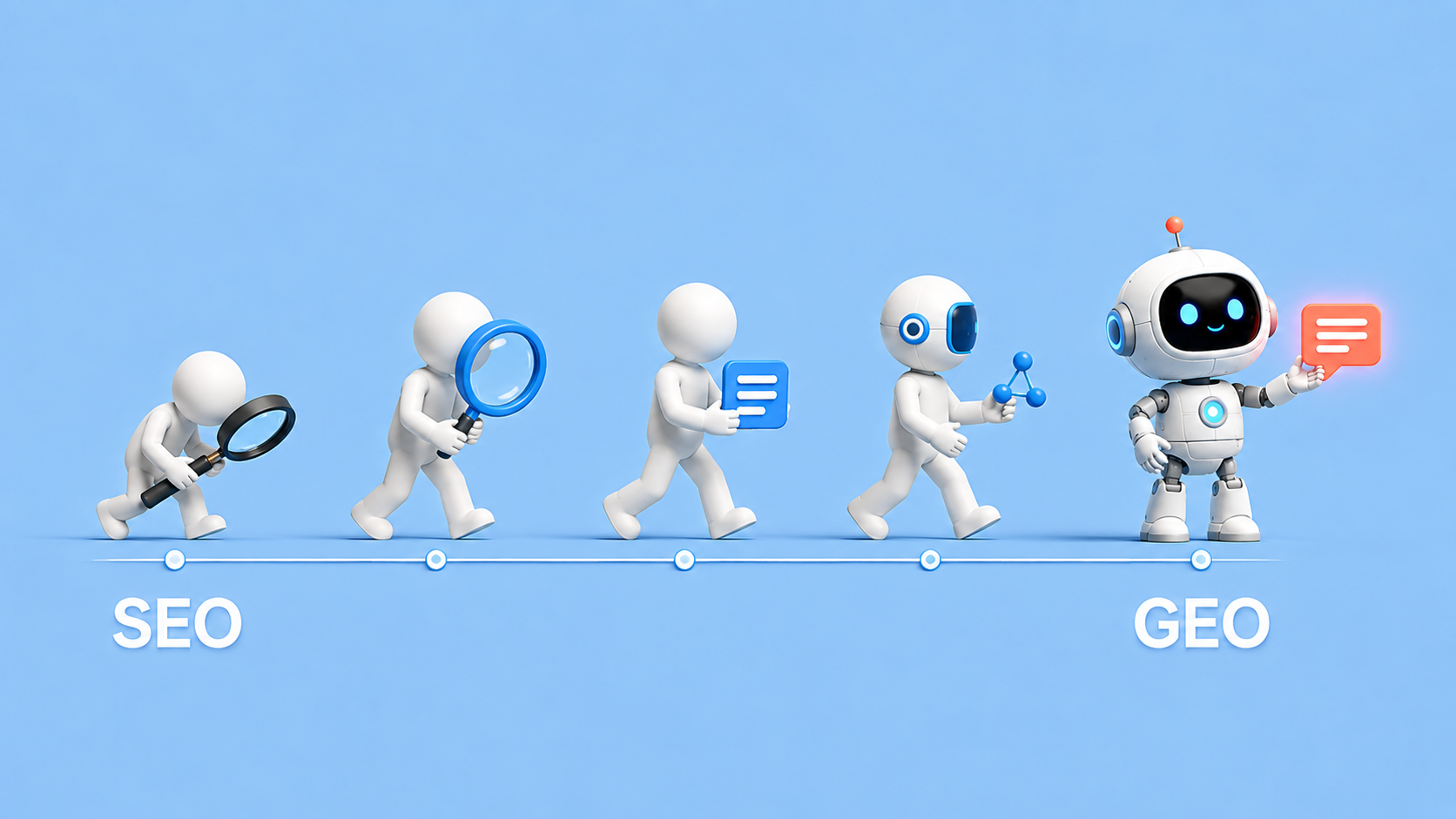
For decades, keywords formed the backbone of search engine optimization.
Businesses identified the words people typed into Google, incorporated those phrases into their websites, and then worked to earn higher positions in search results.
And while that foundation still matters, the search experience is evolving.
Today, people are increasingly asking conversational questions and receiving synthesized responses from Google’s AI features, ChatGPT, and other answer engines.
These systems handle searches and results somewhat differently from traditional search engine algorithms.
As a result, businesses need to expand how they think about SEO keywords
To be successful in today’s digital world, companies need to understand that the new AI era is not the death of keywords altogether.
It is simply the next step in the evolution of keyword strategy.
Why Traditional SEO Focused So Heavily on Keywords
Earlier search engines depended heavily on words and phrases to determine whether a page was relevant to a query. If someone searched for “commercial roofing company,” a page using that exact phrase in its title, headings, copy, and metadata offered strong relevance signals.
This made keyword targeting a central part of SEO, so marketers researched search volume, competition, and keyword variations, then created or optimized pages around selected terms.
That approach helped search engines categorize content, but it also encouraged practices such as keyword stuffing, awkward phrasing, and creating several nearly identical pages just to target minor variations of the same query, which was obvious to the user and sometimes distracting from the actual products, services, or other objectives of the company.
Search engines have steadily become better at recognizing those tactics, and better at understanding language as well. Exact-match relevance does still remain useful, but it is now only one part of a much more sophisticated evaluation process.
How AI Search Understands More Than a Phrase
Modern AI search systems evaluate relationships between words, ideas, entities, and user needs. Through this kind of semantic search, they can now recognize that different phrases may express the same underlying request.
For example, searches for “how to lower customer acquisition cost,” “reduce marketing cost per sale,” and “make paid campaigns more efficient” may use different language, but they share closely related meanings and may reflect the same business challenge. All of which an AI agent can easily pick up on.
In fact the AI system can connect those ideas without requiring a page to repeat every exact variation. It might also consider supporting concepts such as conversion rates, audience targeting, customer lifetime value, landing-page performance, and attribution.
Why Exact-Match Keyword Repetition Has Lost Importance
Remember that including a primary keyword in a page title, heading, introduction, and other natural locations can still help clarify the subject. Repeating it excessively, however, does not make the content more complete or useful and is often annoying and distracting to users.
People report that forced repetition like this often makes copy harder to read and limits its relevance. A page that is narrowly constructed around one phrase is likely to fail to address the related questions an AI system expects to see when evaluating the broader topic.
Strong content uses natural language instead. It incorporates relevant terminology where appropriate, varies its wording, and explains concepts in the language real customers use. This gives both traditional search engines and generative systems much more context.
The most important question is no longer, “How many times did we use the keyword?” but, “Have we provided the information someone searching this topic actually needs?”
Search Intent and Topical Depth Matter More
Search intent describes the purpose behind a query. A user may want to learn something, compare alternatives, solve a problem, evaluate a provider, or make a purchase. Two queries that contain similar words can lead to very different content needs.
Consider someone searching for “CRM software.” That broad phrase could indicate early research. A search for “best CRM for a small construction company,” however, suggests more specific requirements and possible buying intent. A useful page would need to discuss relevant workflows, implementation considerations, integrations, pricing questions, and evaluation criteria, rather than simply repeating “CRM software.”
It is here that topical depth becomes so critical. Content should cover the central subject while also anticipating the user’s logical next questions. Depending on the topic, that might include:
- How does the product, service, or process work?
- Who is it best suited for?
- What problems does it solve?
- What does it cost?
- How does it compare with the alternatives?
- What should someone consider before making a decision?
- What should happen next?
Addressing these questions creates a more complete resource, and it also gives AI systems clearer passages they can interpret, summarize, and potentially reference.
Related Questions Strengthen AI Visibility
Generative systems frequently put together answers from information that addresses multiple parts of a user’s request. Improving AI visibility therefore, requires content that extends beyond a single query.
Related questions, supporting topics, definitions, examples, and comparisons establish context, descriptive headings make individual sections easier to understand, direct answers help readers find information quickly, and deeper explanations provide the detail that’s needed to build confidence.
This approach is an important part of generative engine optimization, or the practice of making information easier for AI-powered platforms to understand and use.
It does not mean every article must become an exhaustive guide. The content should be as detailed as the subject and intent require. A focused service page may answer high-priority buying questions for example, while a long-form educational resource may explore the topic more comprehensively.
In both cases, clarity is more valuable than length for its own sake.
Keyword Research Still Matters
It’s easy to believe that AI has made keyword research irrelevant, but that is most definitely not the case. Search data remains one of the best ways to understand what an audience cares about and how people describe their own needs.
Keywords can reveal things like:
- The demand for a product, service, or topic
- Common problems and questions
- Differences between early research and purchase-ready searches
- Terminology that’s used frequently by customers
- Opportunities competitors have overlooked
- Related subjects that belong in a content plan
The difference now lies in how this information is applied. Rather than treating every keyword as a separate assignment, marketers can now group related terms by topic and intent. Those groups can then inform a primary page, supporting articles, FAQs, case studies, comparisons, or other content that is suited to different stages of the buyer journey.
In other words, keyword research should guide the strategy, not dictate robotic copy.
Building a Keyword and GEO Strategy Together
An effective GEO strategy begins with many of the same insights that support successful SEO: audience research, technical accessibility, credible expertise, and content aligned with real demand.
At Three29, keyword research serves as a foundation for our broader search strategy. We connect SEO data with buyer intent to understand not only what people search for, but also what they need to learn before they can make a decision.
From there, we then build content around meaningful topics, related questions, and decision-making needs. This integrated keyword strategy helps businesses remain discoverable in traditional results while improving their ability to appear in AI-generated answers.
Businesses do not need to abandon their existing SEO programs. In fact, they need to adapt them. That may mean consolidating thin pages, expanding high-value content, answering missing buyer questions, improving structure, and/or measuring visibility beyond rankings alone.
Keywords are still valuable… their role is simply changing by going from exact phrases to strategic clues about topics, intent, and demand. Businesses that recognize this shift early have an advantage. They can create content that performs across today’s search landscape and that will remain useful as search behavior continues to evolve.
Reach out to our team at Three29 to see how we can help you combine keywords and GEO strategy to increase your relevance, helpfulness, and overall success.